
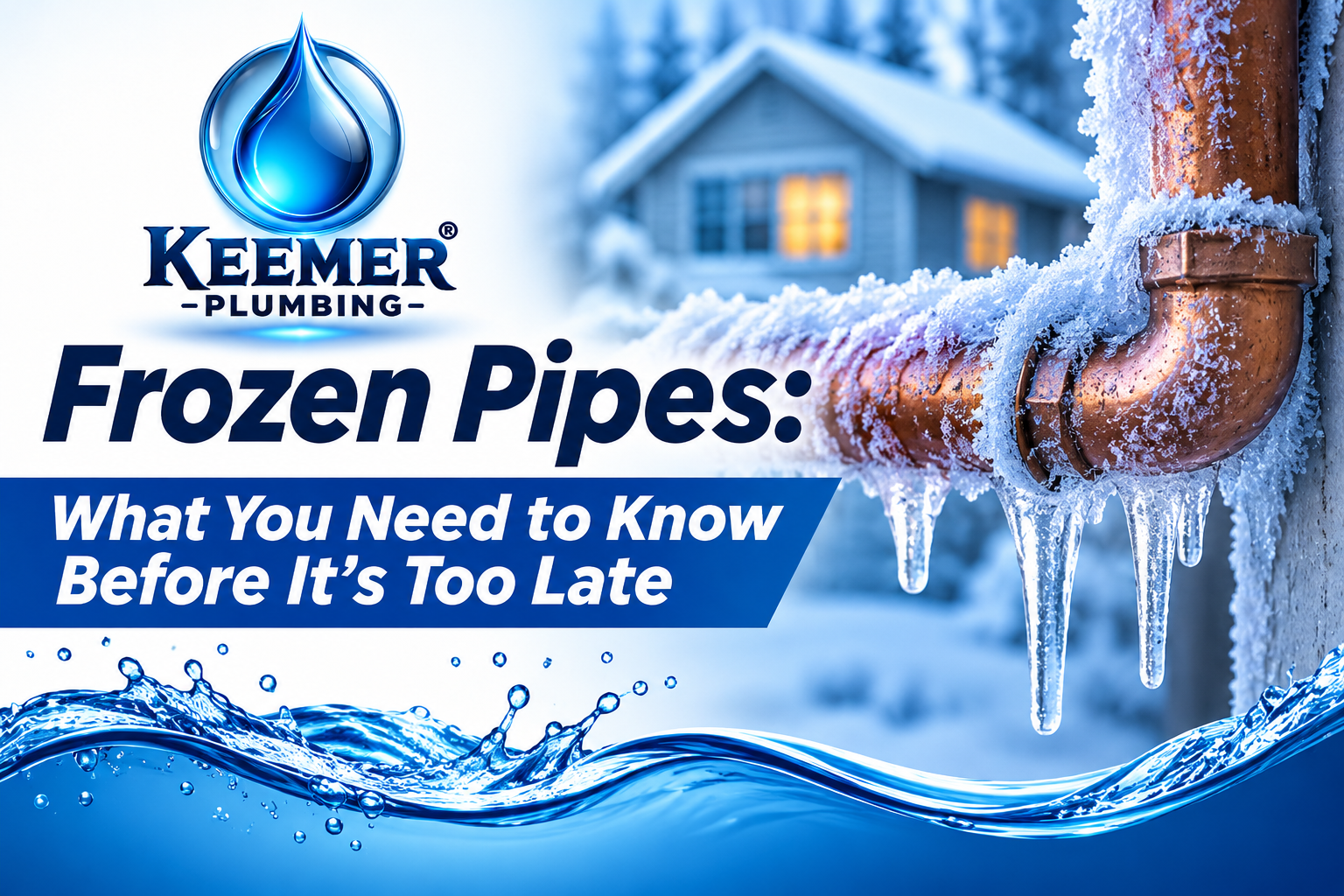
Frozen pipes are a common concern for Utah homeowners during the winter months. When temperatures drop below freezing, water inside exposed or poorly insulated pipes can freeze and expand, putting pressure on the plumbing system. This can cause pipes to crack or burst, leading to water damage and costly repairs. Knowing how to prevent frozen pipes and recognize the warning signs can help protect your home throughout Utah’s cold winters.
At Keemer Plumbing, we understand how damaging frozen pipes can be during Utah’s cold winters. Taking preventive measures before temperatures drop can help protect your plumbing system and reduce the risk of burst pipes. Whether you have exposed water lines, plumbing in unheated areas, or concerns about older pipes, knowing what to watch for can help you avoid expensive water damage.
How to Prevent Frozen Pipes Before Winter Strikes
Frozen pipes in Utah are a common winter concern, especially when water lines are located in unheated or poorly insulated areas. Pipes in basements, crawl spaces, garages, and exterior walls may be more vulnerable to freezing. Taking a few preventive steps before temperatures drop can help protect your pipes and reduce the risk of costly water damage.
To keep your pipes from freezing, consider these essential preventive measures:
-
Insulate exposed pipes: Protect water lines in unheated areas such as crawl spaces, garages, and basements with appropriate pipe insulation
-
Let faucets drip when necessary: During extreme cold, allowing a small trickle of water from vulnerable faucets may help reduce the risk of freezing.
- Seal cracks and openings: Close gaps around pipes where cold outside air can enter your home.
-
Open cabinet doors: Allow warm indoor air to circulate around plumbing beneath kitchen and bathroom sinks, especially along exterior walls.
- Maintain indoor temperatures: Keep your thermostat at 55°F or higher when you’re away during winter.
- Use heat tape safely: For vulnerable pipes, use approved heat cables according to the manufacturer’s instructions.
Preventing frozen pipes is generally easier and less expensive than repairing the damage caused by a burst water line. Proper insulation, maintaining indoor temperatures, and addressing vulnerable plumbing areas before winter can help protect your home. A little preparation now can reduce the risk of unexpected plumbing repairs and costly water damage later.
What to Do When Your Water Lines Freeze
If you suspect a frozen pipe, it’s important to act carefully to prevent further damage. Reduced water pressure, little or no water coming from a faucet, or visible frost on exposed pipes can indicate freezing. If you discover a burst pipe or active water leak, shut off your home’s main water supply immediately. If there is no visible damage, follow these safety precautions when dealing with frozen plumbing.
-
Check for frozen pipes: Look for reduced water flow, frost on exposed pipes, or unusually cold sections of plumbing. Avoid forcing or striking frozen pipes.
-
Shut off the main water supply if necessary: If a pipe has burst, is leaking, or appears damaged, turn off the main water valve immediately to help prevent flooding.
-
Open the affected faucet: If there is no evidence of a leak or damaged pipe, open the faucet slightly to relieve pressure and allow water to flow as the ice melts.
-
Apply gentle heat safely: Use a hair dryer on a low setting or warm towels to gradually thaw accessible pipes. Keep electrical devices away from water. Never use an open flame, torch, or high-temperature heating equipment.
-
Inspect for leaks after thawing: Watch for dripping water, cracks, or changes in water pressure. If you discover damage, shut off the water supply and contact a licensed plumber.
If a frozen pipe is located inside a wall, ceiling, or another inaccessible area, it’s best to have a licensed plumber inspect the problem. Attempting to thaw hidden pipes without proper equipment can cause additional damage. If you notice leaks, cracked pipes, or water pressure problems after thawing, professional plumbing repairs may be necessary.
Call Keemer Plumbing Before Frozen Pipes Become a Bigger Problem!
Frozen pipes can cause serious water damage when temperatures drop during Utah’s winter months. Taking preventive measures and addressing plumbing problems early can help protect your home from costly repairs. If you have concerns about exposed pipes, aging water lines, or damage caused by freezing, Keemer Plumbing can inspect your plumbing system and recommend the appropriate repairs or improvements.
Don’t wait for a small plumbing problem to become an expensive repair. Contact Keemer Plumbing today to schedule a free estimate and learn how we can help protect your home’s plumbing system.
Keemer Plumbing proudly serves homeowners throughout Salt Lake County and surrounding Utah communities. From repairing damaged water lines to replacing aging plumbing systems, our experienced team provides professional plumbing solutions designed to keep your home’s water system working reliably.