If you’re considering repiping your home, you probably have questions about what the process involves, how long it takes, and what to expect during installation. Whole-home repiping replaces aging or deteriorating water supply lines with new piping to help improve reliability and reduce the risk of future leaks.
At Keemer Plumbing, we specialize in residential repiping throughout Salt Lake County and surrounding Utah communities. Our team uses Uponor PEX-A piping with expansion fittings and takes precautions to protect your home throughout the installation process. Understanding each step can help you feel more prepared before your repiping project begins.
Signs That Your Home Needs Repiping
Frequent plumbing leaks, aging or corroded water lines, discolored water, and recurring water pressure problems can indicate that your home’s plumbing system needs attention. While these issues don’t always mean a complete repipe is necessary, they may signal deteriorating water supply piping.
A professional plumbing inspection can help determine whether individual repairs are sufficient or whether whole-home repiping would provide a more reliable long-term solution.
Initial Assessment and Consultation
Before beginning a whole-home repiping project, Keemer Plumbing evaluates the home’s existing water supply system, plumbing fixtures, and water pressure. This initial assessment helps us determine the scope of work and identify any plumbing concerns that should be addressed during the repipe.
We discuss the homeowner’s needs, review possible piping routes, and identify areas where drywall access may be necessary. We also explain the benefits of our Uponor PEX-A piping system, which uses brass expansion fittings and carries a 25-year manufacturer’s warranty.
After evaluating the home, we provide a free estimate outlining the proposed work. We explain what is included, discuss the anticipated project timeline, and answer questions so homeowners know what to expect before installation begins.
Preparing Your Home for Repiping
Preparing your home before a repiping project helps the installation process go smoothly. Homeowners should clear personal belongings from areas where plumbers will need access, including bathrooms, kitchens, laundry rooms, and areas around the water heater. Moving furniture and valuables away from work areas also helps protect your belongings.
At Keemer Plumbing, we take precautions to protect your home by covering floors and high-traffic areas with protective materials. When access to piping inside walls is necessary, we typically cut square drywall openings approximately 16 inches by 16 inches, although the number and size of openings depend on the home’s layout.
Water service may need to be temporarily shut off during certain stages of installation. Our team works to minimize interruptions and keep homeowners informed about anticipated shutoffs. In many cases, we can maintain water service during portions of the project.
Homeowners should also understand that drywall patching and painting are not included in our standard repiping estimates unless specifically stated otherwise.
The Repiping Process: Step-by-Step
At Keemer Plumbing, we follow a systematic installation process to replace aging water supply piping while minimizing disruption to your home.
1. Accessing Existing Plumbing: Our plumbers carefully open sections of drywall where necessary to access existing water lines and create routes for the new piping.
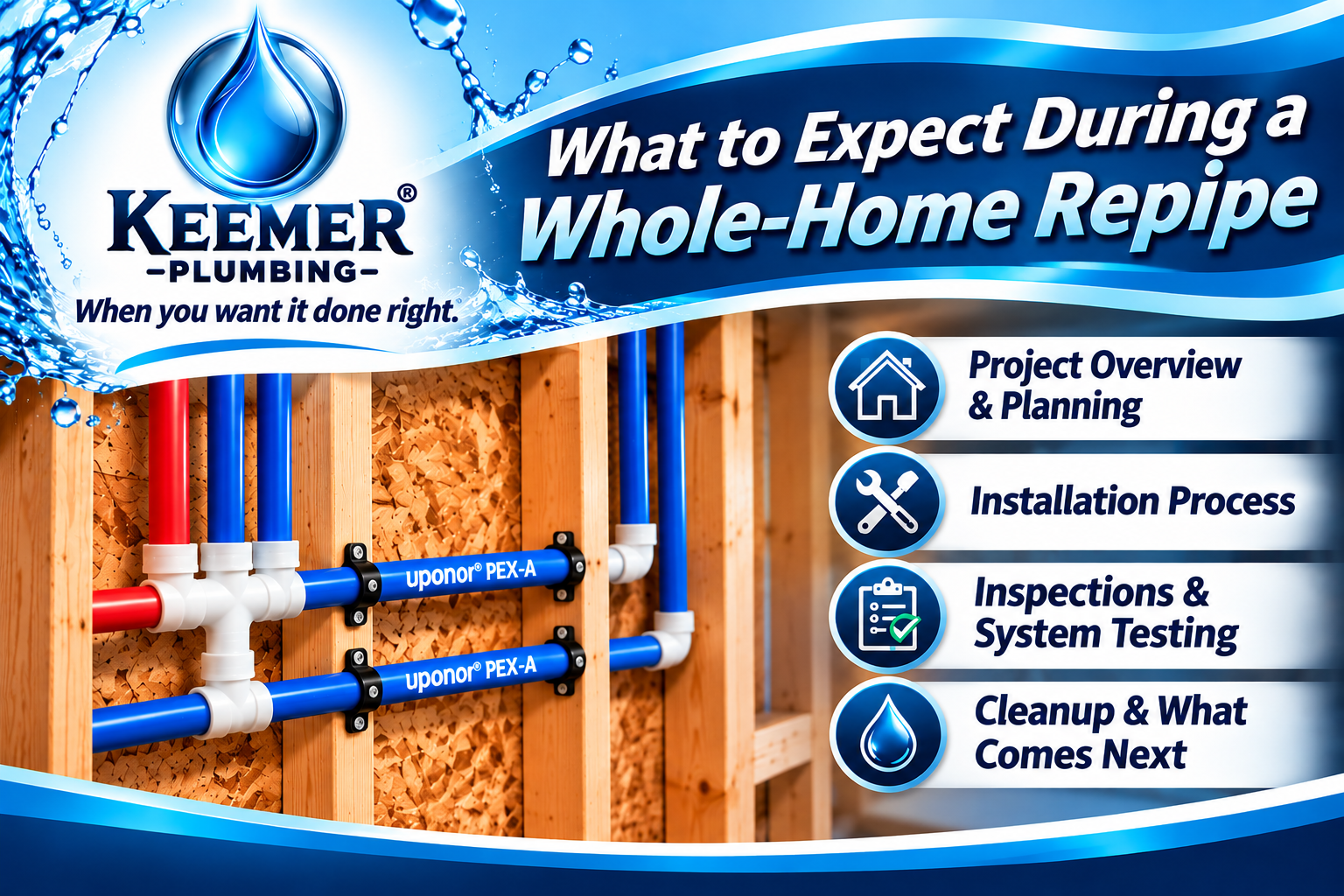
2. Installing New Water Lines: We install Uponor PEX-A piping using brass expansion fittings. New hot and cold water lines are routed to the appropriate plumbing fixtures, including sinks, toilets, showers, bathtubs, and laundry connections.
3. Connecting Plumbing Fixtures: We connect the new piping to the existing water main and plumbing fixtures. Depending on the project scope, this may include installing a new main water shutoff valve, pressure-reducing valve, angle stops, and braided supply lines.
4. Testing and Inspection: Once installation is complete, we test the new water supply system for leaks and proper operation. Required city inspections are included as part of our standard repiping process.
5. Final Cleanup: Our team cleans the work areas and removes plumbing-related debris. Drywall openings are left ready for repair unless drywall patching is specifically included in the estimate.
Types of Pipes Used in Repiping
Several types of piping materials are available for residential water supply systems, including copper, CPVC, and PEX. Each material has different installation requirements, advantages, and limitations.
At Keemer Plumbing, we specialize in Uponor PEX-A piping for whole-home repiping projects. This flexible piping system allows our plumbers to route new water lines through walls, ceilings, and other accessible areas while reducing the number of fittings needed compared with some rigid piping systems.
We use genuine Uponor expansion fittings, which create secure, reliable connections using the manufacturer’s expansion method. Uponor PEX-A piping also offers corrosion resistance and flexibility, making it an excellent option for replacing aging residential water supply lines.
Our installations include a 10-year Keemer Plumbing workmanship warranty, along with Uponor’s 25-year manufacturer’s warranty, subject to the applicable warranty terms.
Potential Challenges and How They Are Addressed
Every home is different, and certain conditions can create challenges during a whole-home repiping project. Older homes, finished basements, limited access to plumbing, and unusual piping layouts may require additional planning to install new water supply lines.
At Keemer Plumbing, we carefully evaluate piping routes to minimize unnecessary drywall openings and disruption to your home. However, some walls and ceilings must be opened to access existing plumbing and install new piping. We explain these requirements before beginning work whenever possible.
Unexpected conditions, such as concealed plumbing problems or inaccessible piping, may occasionally require adjustments to the original installation plan. If additional work becomes necessary, we discuss the situation with the homeowner before proceeding.
Our goal is to complete each repiping project efficiently while maintaining quality workmanship, protecting your property, and keeping you informed throughout the installation process.
Cost Considerations
The cost of whole-home repiping depends on several factors, including the size of the home, number of plumbing fixtures, accessibility of existing water lines, and complexity of the installation. Homes with multiple bathrooms, finished basements, or difficult piping routes may require additional labor and materials.
At Keemer Plumbing, we provide free estimates so homeowners understand the proposed scope of work and associated costs before the project begins. Our estimates outline the plumbing work included, such as new water supply lines, fixture connections, and any additional plumbing upgrades requested by the homeowner.
Homeowners should also consider expenses that may not be included in the plumbing estimate, such as drywall patching, painting, or other restoration work. We explain these exclusions upfront to help customers plan their overall project budget.
For homeowners who prefer flexible payment options, Keemer Plumbing offers financing through Service Finance, subject to credit approval and financing terms.
Post-Repiping Cleanup and Restoration
Once the new water supply piping has been installed, Keemer Plumbing checks the system for leaks and verifies that plumbing fixtures are operating properly. We also coordinate the required city inspection as part of our standard repiping process.
After completing the plumbing work, our team removes installation-related debris and cleans the work areas. We take precautions throughout the project to protect floors and high-traffic areas and leave the home as clean as reasonably possible.
Because accessing existing plumbing often requires cutting openings in walls and ceilings, homeowners should plan for drywall repairs after the repiping work is completed. Drywall patching, texturing, and painting are not included in our standard repiping estimates unless specifically stated otherwise.
Before leaving, we review the completed plumbing work with the homeowner and answer any questions about the new water supply system.
Long-Term Benefits of Repiping Your Home
Replacing aging or deteriorating water supply lines can provide several long-term benefits for homeowners. One of the biggest advantages of whole-home repiping is reducing the risk of recurring leaks caused by worn-out or corroded piping.
New Uponor PEX-A piping is corrosion-resistant and can help provide a more reliable water supply system. In homes where deteriorating pipes or internal buildup have restricted water flow, repiping may also improve water pressure and overall plumbing performance.
Whole-home repiping can also help reduce future repair expenses associated with aging water lines. Instead of repeatedly repairing individual leaks, homeowners can address widespread piping deterioration with a comprehensive replacement.
With professional installation and proper maintenance, a new water supply system can provide dependable service for many years. Keemer Plumbing backs its repiping installations with a 10-year workmanship warranty, along with Uponor’s 25-year manufacturer’s warranty, subject to applicable warranty terms.
Tips for Maintaining Your New Plumbing System
After your home has been repiped, a few simple maintenance practices can help keep your new plumbing system operating properly. Periodically check underneath sinks, around toilets, near the water heater, and at other accessible plumbing connections for signs of moisture or leaks.
Maintaining proper household water pressure is also important. Excessive water pressure can place unnecessary stress on plumbing fixtures, valves, and appliances. If your home has a pressure-reducing valve, it should be checked periodically to ensure it is functioning correctly.
Homeowners should also know where their main water shutoff valve is located and how to operate it. If you notice unusual changes in water pressure, unexplained moisture, or other plumbing concerns, contact a licensed plumber for an inspection.
If your home has hard water, installing or maintaining a water softener may also help reduce mineral buildup in water heaters and plumbing fixtures. Following these simple practices can help protect your plumbing investment for years to come.
Contact Keemer Plumbing Today!
If you’re considering whole-home repiping, Keemer Plumbing is here to help. Our experienced team specializes in replacing aging water supply lines with Uponor PEX-A piping, providing homeowners with a reliable, long-lasting plumbing solution.
We proudly serve Salt Lake County and surrounding Utah communities, offering free estimates, upfront pricing, and a 10-year workmanship warranty. From the initial consultation through installation and inspection, we’re committed to quality workmanship and clear communication.
Ready to get started? Contact Keemer Plumbing today or call 801-330-5383 to schedule your free repiping estimate.
Keemer Plumbing — When you want it done right.